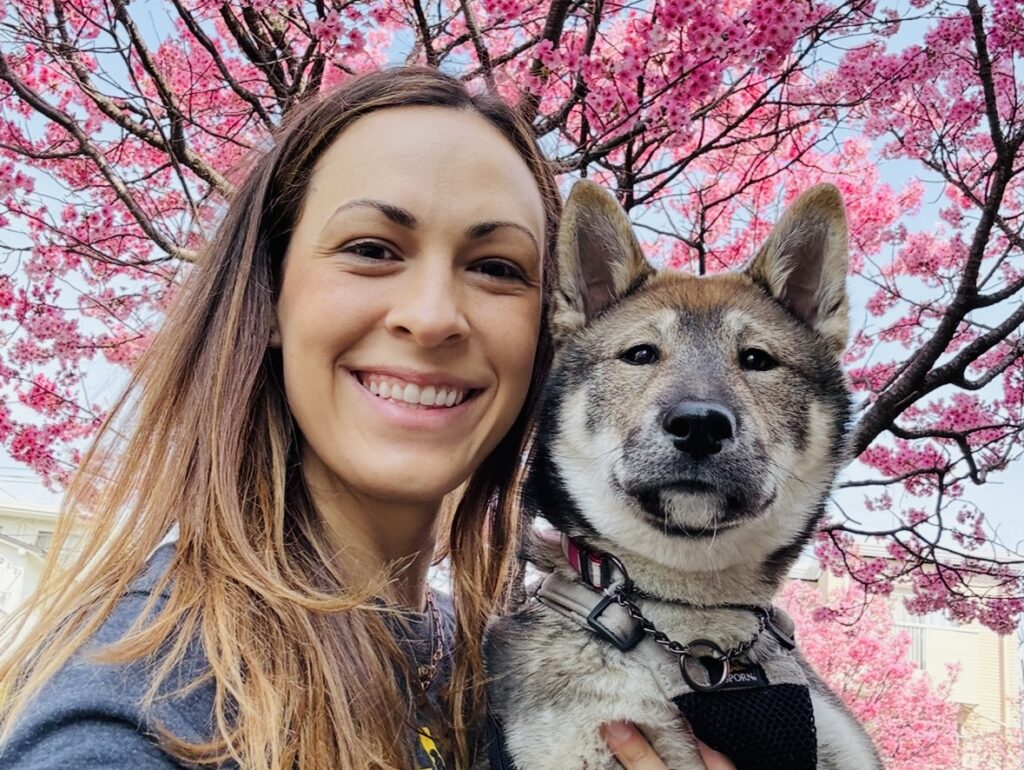
One of the initial challenges we faced after moving to Tokyo was securing an apartment that accepted foreign tenants. The next hurdle? Finding one that also allowed dogs. So yeah—having a dog in Japan has definitely come with a few surprises. Here’s what else we’ve discovered about dog ownership in Japan:

Owning a “big dog”
Roughly 30% of Japan’s population lives in the Greater Tokyo Area, where dog-friendly apartments are already hard to find. And if pets are allowed, there’s often a strict weight limit—usually around 10 kilos (22 pounds). The same weight rule applies to public transportation: dogs must be under 10 kilos, in a carrier, and even then, they need their own ticket.
As a result, large dog breeds are rare in Tokyo. Here, anything over 10 kilos is considered “big.” The dogs I see most often are Shiba Inus (naturally), Mame Shibas (mini Shibas), Toy Poodles, Schnauzers, Papillons, Dachshunds, Italian Greyhounds, and Pomeranians.
Our dog, Nori, is a Shikoku Ken. She’s around 25–30 pounds at seven months, so not huge by any means—but you’d think she was a Great Dane based on people’s reactions. Everyone yells “Ōkii!” (“Big!”) when they see her, even though she’s barely bigger than a Shiba. Coming from a family that raised Dobermans, I disagree.
That said, her “Ōkii” status does make people nervous. Once, a grown woman refused to walk down the same street as us when Nori was just 16 weeks old. What really surprises me, though, is how scared kids are of dogs here. We walk past schools and playgrounds, and whole groups of kids move away like she’s Godzilla. In all the time we’ve had Nori—even when she was a small, undeniably adorable puppy— out of the hundreds of kids we’ve passed, maybe four or five have ever come up to say hi.
Our Dog
Our dog, Nori, is a Shikoku Ken—one of Japan’s six native dog breeds, collectively known as the Nihon Ken. Shikokus are among the rarest, with an estimated 4,000 to 6,000 living in Japan today.
I first fell in love with the breed nearly 15 years ago after seeing a photo—something about their wolf-like appearance captivated me. I’d previously owned a Shiba Inu and an American Akita in the U.S., so I was already familiar with Japanese breeds. But Shikokus? I never thought I’d actually get to own one. They’re incredibly rare both in Japan and even more so abroad.
Fast forward: I move to Milan to marry my Italian husband and—totally by chance—find a Shikoku breeder nearby. We were waiting for a puppy from the breeder’s next litter, when we got transferred to Japan. “No problem,” I thought—“I’ll get a Shikoku straight from the source.” It still took me a full year to find our puppy.
One thing that really surprised me about Tokyo? Most people here get their pets from pet shops. That totally threw me off—back home, we’re constantly warned that pet shop puppies often come from puppy mills, so I was super hesitant. Eventually, I found a breeder through a website that connects people with breeders—and that’s how I found Nori. We named her Nori because it’s a Japanese word (it means seaweed!) and honestly, we just thought it sounded cute. While her name often gets a laugh from locals, I once met a white Shiba named Tofu, which reassured me that Nori wasn’t too out of place.
Getting her home took some effort. A Japanese friend helped us talk to the breeder, and eventually I hopped on the Shinkansen from Tokyo to Kyoto to pick her up. She was 12 weeks old and absolutely perfect.

Dog Stroller Land
I heard somewhere that Japan has more dog strollers than baby strollers these days — probably because birth rates are low and dog ownership is up. Honestly, as a dog person, I kind of love that. My dog is my baby, after all. But she’s also, y’know, a dog. So while the little dog outfits and fancy strollers are super cute, I get frustrated when I go to a pet store and find way more frilly costumes than useful stuff. Where are the decent dog beds for pups over 15 pounds? Or cute, practical harnesses that don’t look like they were designed for a teacup poodle? I already have a whole wishlist of pet gear I’m planning to buy when I visit the U.S. — Japan just isn’t cutting it for my 30-pound girl.
Is Tokyo Dog Friendly?
Back in Milan, dogs were pretty much part of the city — they could ride the trains, hang out at malls, chill at outdoor cafés. Most people weren’t afraid of them, and the dogs were so used to city life they usually just ignored everyone. Some of the best moments were when a big friendly dog, like a golden retriever, would hop on the train and try to charm passengers into giving them a few “pets”. The owners were always respectful about space, but if you were clearly a dog person, they’d let the dog come say hi.
Tokyo’s a bit different. There are some dog-friendly cafés and parks, which is great, and I love how there are so many little green spaces around the city. But a lot of them have strict “no dogs” signs. Additionally I’ve noticed that in many areas, especially near residential buildings, there are quite a lot of signs related to dogs — reminders to clean up after them or even notices about surveillance cameras to monitor dog walkers. Individually, the signs may seem reasonable, but the sheer number and tone of them can feel a bit aggressive. It sometimes gives the impression that dog owners aren’t welcome, even on public sidewalks. In my experience, the majority of dog owners here in Japan are extremely conscientious — most even carry water to rinse after where their dog pees. I don’t believe the signs are meant to be unkind, but the volume of them is a bit much in my opinion.
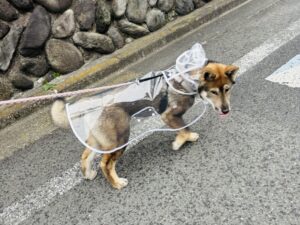
Whenever I visit friends in “dog-friendly” apartment buildings here in Tokyo, I often see signs saying dogs aren’t allowed in the elevator or that they have to be carried through the building. I get it — not everyone’s a dog person — but it feels a bit contradictory. Makes me wonder how “dog-friendly” the place really is. I hope that more folks start seeing how special dogs really are. The takeaway Tokyo is somewhat friendly to tiny dogs.
Other Dog Lovers here
I know I’ve pointed out some downsides of having a dog in Tokyo, but here’s something I do love: a lot of people here are totally obsessed with their dogs. As you might have gathered from the whole dog stroller phenomenon, it’s clear that many treat their pets like family.
One of the most heartwarming aspects of having a dog in Tokyo is how it breaks social barriers. People who might otherwise be too shy or reserved will often approach me just to greet my dog. Sometimes they speak in Japanese, even if I don’t understand, or they’ll use gestures to express their excitement. Surprisingly, I’ve also discovered that more people speak English than I originally assumed.
Since getting Nori, I’ve made several local dog mom friends, and now there are neighbors who call out her name and wave even when I’m walking without her — which I absolutely love. Although some people seem hesitant or even afraid of dogs, I think it’s mostly due to unfamiliarity. Finding pet-friendly housing in Tokyo can be difficult, so dog ownership isn’t as widespread. But even when people keep their distance, they’ll often still smile and say “Kawaii!” (cute). So I try to see people here as dog lovers and hopefully as future dog lovers in the making.

For more of our life in Japan and Tokyo Recommendations check out these other posts:
Where to go for Sakura (Cherry Blossoms) in Tokyo