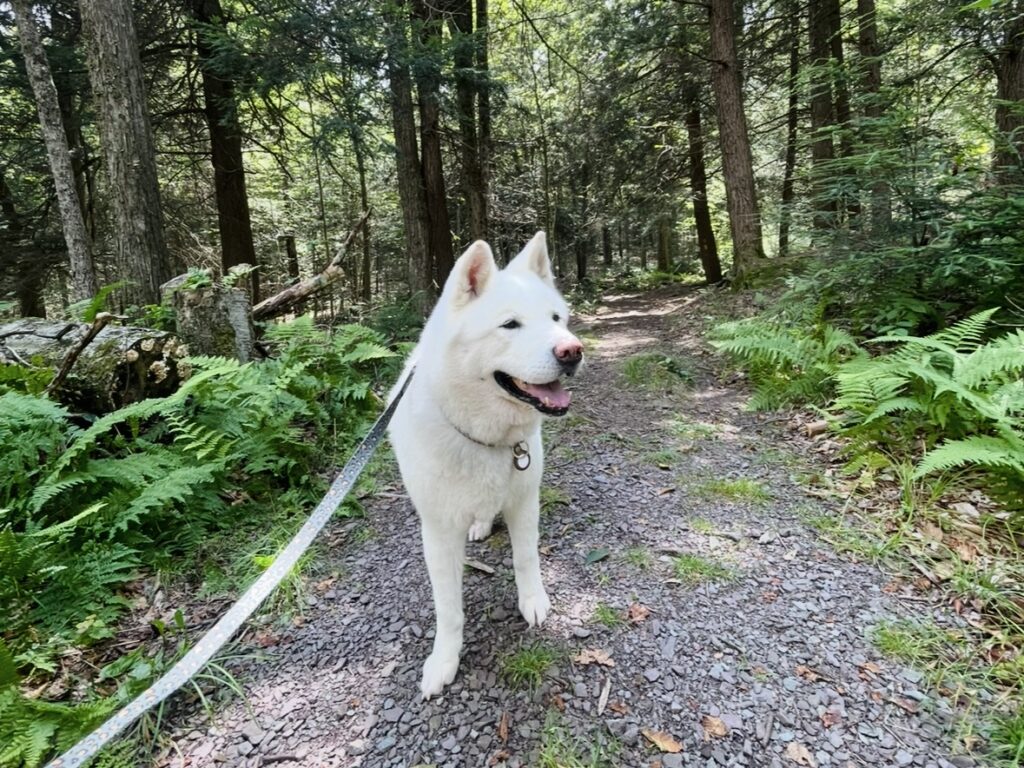
These days, the Shiba Inu gets all the attention—and honestly, with their cute faces and sassy personalities, it’s easy to see why. But the Akita Inu, their big, serious cousin, has a story worth knowing. Once used to hunt bears in the snowy mountains, the Akita has become a powerful symbol of loyalty in Japan. In this article, we will explore the evolution of this iconic breed and how it came to exist in two distinct forms: the Japanese Akita Inu and the American Akita. Also, I will share my own experience living with an Akita.
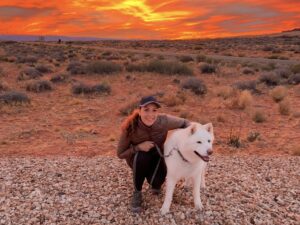
Big Dog, Bigger Legacy: The History of the Akita Inu
The Akita Inu is the largest and most iconic of the native Japanese breeds. It goes way back, possibly over 1,000 years, and started out as a hunting dog in the snowy mountains of Akita Prefecture. The Akita was developed in Japan’s Akita Prefecture from Matagi hunting dogs. These dogs were tough enough to take on wild boar and even bears. Over time, they became symbols of loyalty and protection in Japan. Immortalized by the famous dog Hachikō, the dog who waited at a train station every day for his owner—even for many years after the owner had died.
In 1937, Hellen Keller became the first person to bring an Akita to the United States after receiving a puppy named Kamikaze-go as a gift during her visit to Japan. While this Akita was an authentic representative of the breed at the time, it likely did not look exactly like the Japanese Akita Inu we recognize today. Having been influenced by fighting dog breeds, Keller’s Akita may have had a bulkier build and broader face than modern Japanese Akitas.

Japanese vs. American Akitas
During WWII, Akitas were nearly wiped out. Food was scarce, and non-military dogs were ordered to be killed. To protect them, some breeders crossed Akitas with German Shepherds so they’d be seen as “useful.” When the war ended, American soldiers brought some of these larger Akitas home—and that’s how the American Akita was born: bigger, heavier, and with more variety in coat color and shape. Currently there are two distinct types: the Japanese Akita Inu between 32 and 45 kilograms (70–100 pounds) and the American Akita 45 and 59 kilograms (100–130 pounds). In Japan, breeders focused on restoring the Akita Inu to a smaller more fox-like Japanese Akita in limited coat colors. This contrasts with the larger and more bear-like American Akita.
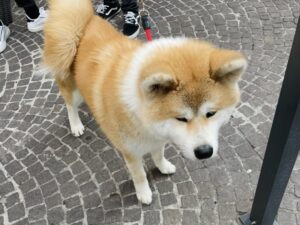
People often think of the Japanese Akita as the “pure” version, but in my opinion, it’s just one take on the breed’s long and complicated history. Akitas were already being mixed with other breeds long before WWII. In the late 1800s and early 1900s, Akitas were intentionally crossed with Tosas, Mastiffs, and German Shepherds to create better fighters or larger hunting dogs. The version we now call the Japanese Akita was really about preserving a certain look and temperament, not some untouched ancient dog. Neither is more “real” — they’re just two paths from the same starting point. But I’ll admit I’m partial to the big, fluffy teddy bear American Akitas—especially because of Eli, my all-white gentle giant.

The Dog Who Won Over My Whole Family
My Akita Inu, Eli, is truly one of the best dogs I’ve ever had. Before bringing him home, I heard all the usual warnings—Akitas can be aggressive, stubborn, and hard to train. So I did my homework. I spoke with several breeders, met their dogs, and carefully chose a puppy. From the start, I enrolled him in puppy kindergarten and followed up with an additional obedience class. I never allowed him to nip as a puppy and set boundaries early.
Looking back, I think I made a lot of the right choices with training. But honestly? I also just got lucky. Eli turned out to be one of the calmest, most submissive puppies I’ve ever met. We already had a very dominant female Shiba Inu, and Eli never once challenged her as the top dog. In fact, the only thing we had to watch closely was feeding time—not because of the Akita, but because our Shiba was extremely food-possessive and territorial around her bowl.
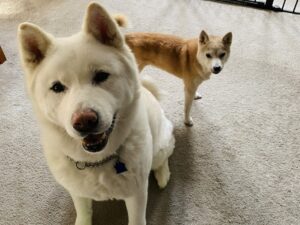
Eli is a sweetheart, playful, but true to the Akita reputation, he never quite mastered fetch. He’s quiet—rarely ever barks—and, above all, he’s incredibly lazy. He loves going to the park, but after about 10 or 15 minutes, he’s ready to lie down and relax. Compared to my Shiba, he was also much gentler with his toys. He never really tore them apart.
The biggest surprise in training was housebreaking. I assumed Japanese breeds would be easy, especially since my Shiba was a breeze. But Eli took a while to get the hang of it. Once he did, though, he was completely trustworthy. We could leave him loose in the house day or night, and he never chewed furniture, raided the trash, or stole food from the counter. Honestly, he’s been one of the easiest adult dogs to live with.

He loves people, but as he’s gotten older, he’s become a bit nervous around strangers when we travel. Never aggressive—just shy. Often hiding behind us or retreating back to our campsite. Still, wherever we go, people stop to compliment him. I know it sounds silly, but he’s the most complimented dog I’ve ever owned. Total strangers will walk up just to say how beautiful he is.
It’s especially funny considering my dad was totally against getting him in the first place—and now he’s Eli’s biggest fan. This dog has become such a sweet, quiet presence in our lives. And honestly, when the day comes that he’s no longer with us, it’s going to break my entire family.

From fearless mountain hunter to beloved family dog, today’s Japanese and American Akitas may look and act differently, but both carry the same spirit of loyalty and strength. My experience with Eli shows that, despite common warnings, Akitas can be calm, affectionate, and well-behaved when raised with care. Next up we’ll talk about the very rare Japanese breed that looks like a mini wolf— the Shikoku Ken.
For more of our adventures and other Japanese dog breeds, check out these other articles:
Living With Japanese Dog Breeds: Part 1 Shiba Inu
Living With Japanese Dog Breeds: Part 3 Shikoku Ken