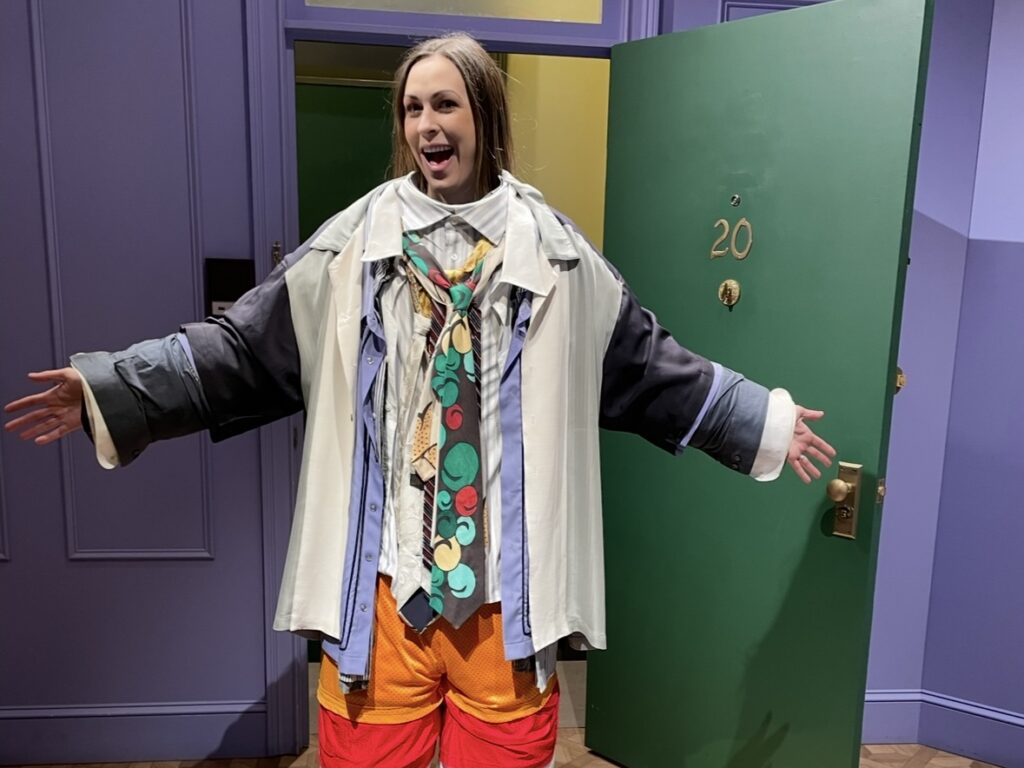
In the US, I often felt a little overdressed. Then I moved to Milan and somehow felt underdressed. But Tokyo? Tokyo feels like the dress code went out the window. Of course, your style changes over time—that’s normal. But living in three totally different countries taught me a lot about style. While it’s natural to adapt a bit to what locals wear, the real shift came when I started dressing based on how I live. What do I mean? Think about those outfits that look amazing in an Instagram post —until you actually try wearing it. Suddenly it’s hot, itchy, and one wrong move away from a wardrobe malfunction. That’s when you realize: some clothes only work for photos, not for everyday life. When you live in cities where walking, stairs, and public transit are your reality, your clothes have to keep up. The way we dress says a lot about how we live. Knowing that helps you shop better, pack smarter, and dress with purpose. If you’ve ever packed the wrong outfit or followed a trend that didn’t work in real life, reading on might help you—so let’s compare fashion in the US, Milan, and Tokyo.

Milan Style: Intentional, Classic, and Seasonal
The best way I can describe Milanese style is that it feels incredibly put-together—nothing is random, everything is intentional. Outfits are often coordinated down to the details: shoes match the bag, pants and skirts are expertly tailored, and you’ll never see open-toed shoes in cold weather. Despite this polish, makeup and hair are often minimal unless it’s a formal event—because the clothes are the real statement.
What stood out to me most was the tailoring. It’s not just common—it’s expected. Many people shop in-store instead of online, which means they can see how something fits before they buy. But even if the fit isn’t perfect, tailoring is accessible. Many stores offer in-house alterations, and local tailors are affordable and easy to find. I really wish this were the case where I’m from in the U.S., where well-done tailoring is often expensive and less common.

Though Italy is known for cutting-edge fashion, there’s still a strong foundation in classic, timeless style. I think that’s because people here tend to invest in quality pieces they plan to wear for years—not just a season. This was a big shift for me. I was used to buying more frequently at lower prices, which led to a closet full of items I didn’t really love. Living in Italy made me much more intentional. Now, I pause before buying anything to ask: Do I need this? Does it work with what I already own? Do I love it enough to make space for it in my closet?
Another key influence from Milanese style is how deeply it’s tied to seasonality. Fabrics, colors, and silhouettes often shift with the time of year. Darker tones dominate fall and winter, while spring and summer bring lighter fabrics and bolder colors or prints. This isn’t a strict rule, but it’s something I noticed again and again—especially how Italians embrace color. From bright pantsuits to vibrant patterns, they aren’t afraid to make an outfit the focal point.
And then there’s fabric. Before moving to Italy, I didn’t think much about material. A pair of pants was just a pair of pants—season didn’t factor in. I mostly wore cheap, synthetic fabrics and never questioned it. But in Milan, I quickly learned the difference between summer pants and winter pants. While synthetics still exist, natural materials like wool, linen, and fine leather are more common—and more accessible. They’re not cheap, but again, the mindset is different: fewer items, better quality.
That’s probably the biggest way Milan has shaped my style. It made me slow down, think more, and buy less—but buy better.

Tokyo Style: Neutral, Minimalist, and Uniform—or Boldly Artistic
I’ve noticed Tokyo styles usually stick to neutral tones and simple, clean aesthetics. Since I like modern, monochrome outfits, I really love the relaxed, understated looks around here. Uniqlo and Muji are popular for every day and professional wear at affordable prices. But while I admire the oversized, relaxed silhouettes that look effortlessly stylish on many Japanese people, they don’t always translate well on me. Unfortunately, what looks clean and minimalist on others can feel shapeless and frumpy on my frame.
Another challenge for me, shopping in Tokyo, was the sizing. Many stores offer “one size fits all” clothing, especially in smaller boutiques. Larger brands will usually carry at least sizes from XS to L, but overall, the range can feel limited. This could partly be cultural—there’s a well-known societal emphasis on being thin, and some companies even offer incentives for staying within a target weight range. But for me, the challenge wasn’t because of weight—it was height. At 5’7″, I don’t consider myself particularly tall, but I often struggle to find clothes that fit right. Normally I’m like US size 6. Here that often translates to a size large, yet somehow the trousers still end up cropped on me. I’m also a U.S. women’s size 9 in shoes, which is usually the largest size stores carry, if they have it at all.
As for the neutral color palettes, when I first arrived, I was obsessed with the super-modern tones—beige, taupe, gray, soft black. But after a year and a half in Tokyo, I’ve started to miss color. Take red nail polish, for example. It’s a small thing, but I’ve always loved it—probably because my Yia Yia (Greek for grandmother) wore it all the time. Yet finding a true, opaque red polish here is surprisingly hard. Most of the reds I come across are sheer, giving just a faint tint. This pared-down aesthetic goes beyond fashion—it reflects the cultural value of wa (和), meaning harmony. Standing out too much or drawing attention can be seen as disrupting group cohesion, so dressing in neutral tones and uniform-like clothes is a way to blend in respectfully, especially in professional or public settings.
On the other hand, many Japanese people are also incredibly creative, expressive, and artistic. Just look at anime, manga, and the country’s world-famous video game culture—there’s a wildly imaginative spirit here. And you see that in fashion too. Especially in areas like Harajuku and Takeshita Street. Here, fashion is loud, colorful, and expressive. Influenced heavily by anime, manga, gothic culture, and pop art, these styles celebrate individuality and creativity. Some stores like United Tokyo and Public Tokyo have caught my eye with their unique, modern designs featuring sometimes deconstructed details that offer a fresh take on contemporary style.
This duality of differing styles—the calm, harmonious uniformity of everyday wear and the wild, imaginative fashion of subcultures—defines Tokyo’s unique style culture. It shows how the city embraces both blending in and standing out, making it a fascinating place for fashion.
What I Wear Now
Tomboy, Effortless, Unexpected — inspired by the Allison Bornstein method.
I feel like I’ve finally found my personal style. Living in Tokyo makes it tricky, since I rarely fit into the clothes here, which limits my options a bit. I’m originally from a place where athleisure reigns supreme, and I’m married to someone from a culture where even a quick trip to the post office warrants dressing up.
After being pulled in so many stylistic directions over the years, I think I’ve finally landed in a space that feels like me. One of my biggest influences was my Yia Yia. She had an incredibly distinct and memorable style. Since losing her, I’ve noticed myself occasionally buying pieces that remind me of her. That’s how iconic her style was — even now, I’ll see a ring, a color, or a pair of shoes and instantly think, “Yia Yia would’ve worn that.”
These days, I’m less concerned with following trends. Instead, I want to channel Yia Yia’s legacy — not just by wearing things she might’ve worn, but by cultivating a personal style that’s unmistakably my own.

For more of our life abroad, check out these other posts:
What to do in Venice—my favorite Italian city
14 of the Best Things to do in Rome
Disclaimer:
This piece includes some generalizations based on my personal experiences living in places like Milan and Tokyo, as well as my own evolving relationship with style. I understand that fashion is highly individual, and what I’ve observed may not reflect everyone’s experience. My intention is to share honest reflections, not to stereotype or exclude. Style is subjective, cultural, and personal — and that’s exactly what makes it so interesting.