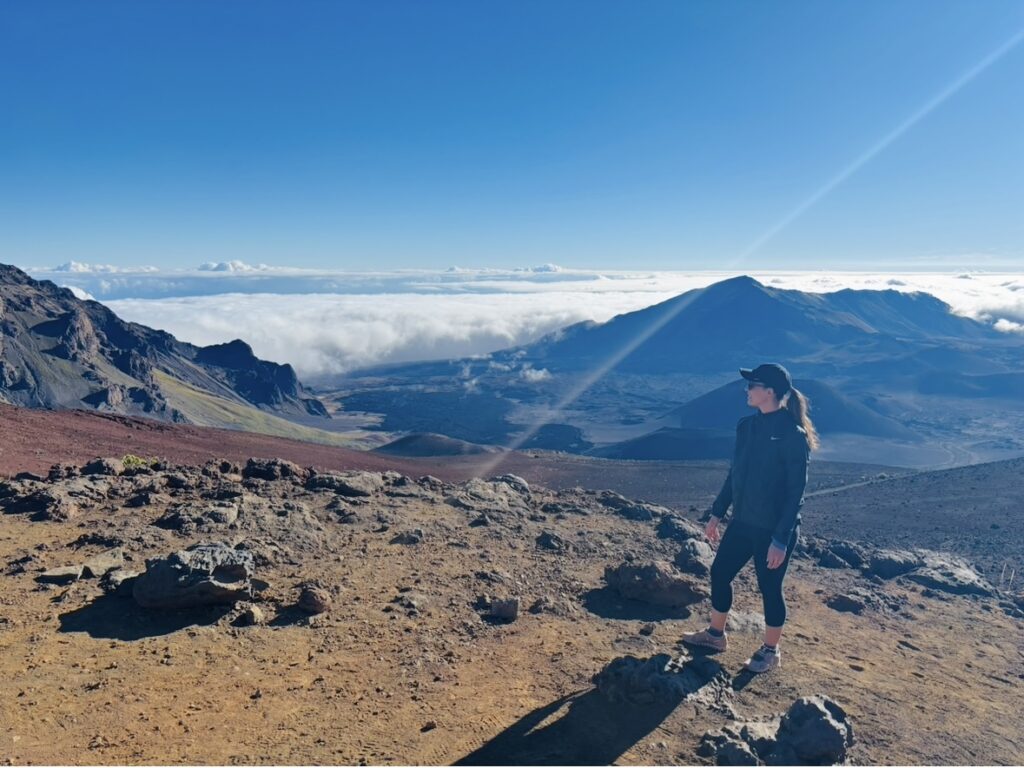
Day three in Maui started before the sun—literally. We woke up in the dark and made our way up the winding roads of Haleakalā to catch one of the island’s most stunning sights: sunrise from 10,000 feet above sea level. After a short hike through the otherworldly crater landscape, we descended from the clouds and made our way to the island’s west side. It was another world—lush beaches and luxury resorts sitting beside areas still visibly recovering from the devastating wildfires. After checking out the beach, we then embarked on a mildly comical island-wide hunt for cash (spoiler: not as easy as you’d think). We capped off the day by meeting friends for dinner at Monkeypod, a local favorite, where the legendary mai tais lived up to the hype.
Read on if you’re into unforgettable sunrises, beautiful beaches, and tracking down the island’s best mai tai.
Day 3: Sunrise at Haleakalā and Exploring Maui’s West Coast
Two months earlier, I had set an alarm to reserve a sunrise entry ticket for Haleakalā National Park. I had heard if you waited until just before your trip, you would be unlikely to get entry tickets. This proved true, but I probably also didn’t need to set the several alarms to book the moment the reservations became available. (There were reservations available for many days after the opened up spots for our dates.)
Fast forward to the day of, we woke at 3 a.m. and drove in complete darkness toward the famous Haleakalā sunrise. From Kihei, where we were staying, it took over an hour to reach the summit. The longest part was the slow, serpentine drive up the narrow mountain road. We approached the entry gate, where a ranger checked our names on the reservation list. Aside from one rude tailgater, the drive was peaceful but required caution due to low visibility.
We arrived at the summit parking lot by 5:30 a.m., about 40 minutes before sunrise. The viewing area along the cliff edge was already crowded. I’ve heard September is one of the slower months for visitors, so in busier seasons, you may need to arrive even earlier to secure a spot. Luckily, a kind older couple let us squeeze in next to them, giving us a great view.
The sunrise itself was breathtaking. No photo I took can truly capture the moment. It felt like standing at the edge of the world. After the sun rose, most people quickly left, probably tired from their early wake-up or ready to warm up and eat breakfast. It was definitely cold up there. I wore leggings, a sweatshirt, a windbreaker, and wrapped a towel around my shoulders— a recommendation from a local the day before. It was enough to keep from shivering, but if we had arrived even earlier I would have needed more layers.
Although Hawaii is a tropical island, Haleakalā’s summit is the highest point on Maui at about 10,023 feet (3,055 meters) above sea level. Night temperatures can drop below freezing even in summer. After the sun rose and temperatures warmed, we took time to hike about an hour into the crater. We didn’t go all the way down, as it would have taken anywhere from 6-8 hours and we had many plans for the rest of the day.
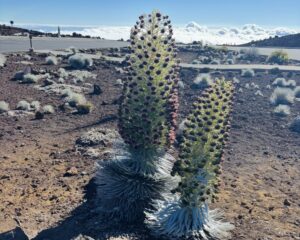
On our way back down the twisting roads out of the park, we stopped at several lookout points, which I highly recommend. At one, we saw the Haleakalā Observatories, which aren’t open to the public but are fascinating as one of the world’s most powerful solar telescopes is located there. We also saw the cinder cones that helped shape Maui’s unique volcanic landscape. Another highlight was spotting the rare Haleakalā silverswords (ʻāhinahina). These alien-like plants grow only on the volcano’s slopes, have silvery sword-shaped leaves, and bloom just once in their lifetime—sometimes after 15 to 50 years—before dying. Their tall flower stalks can reach six feet, and they’re protected by law because of their rarity.
Maui Strong: How to Help
Back in Kihei, we changed from hiking clothes into beachwear and drove to Kapalua Beach on Maui’s west coast. The resort and golf areas in Kapalua, Kāʻanapali, and Wailea were spared from the devastating August 2023 fires. The fire damage was mostly concentrated around Lahaina Town and nearby neighborhoods, where many locals lost their homes and lives. Driving through those areas, you could see ongoing construction and empty lots. Although the news coverage has died down, many families have not yet recovered. If you feel moved, consider donating to organizations like the Hawaiʻi Community Foundation – Maui Strong Fund or Aloha United Way – Maui Fire Relief Fund. I heard from friends that some who lost their homes have not been able to rebuild and have had to leave the island.
One thing I love about Hawaii is that beaches are public resources, protected by strong laws and traditions. No individual, resort, or private entity can claim exclusive ownership or block access to shorelines. Even among fancy resorts, public beach access paths are available, though sometimes subtle. Walking to the beach in Kapalua, I felt like I was trespassing on private property, but it’s the law that beaches remain open to all.
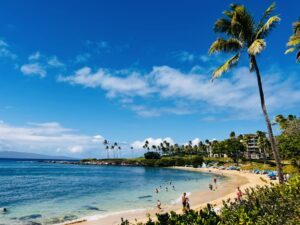
Although the beach access was free, parking wasn’t—it cost $10 for three hours. After a quick swim and a sandy nap, we left. We stopped at several banks trying to withdraw money from our foreign account with no luck—Maui is a little less accessesable and foreigner friendly than Oahu. As we continued our banking tour we made a quick pit stop at McDonald’s for a taro pie and coffee, costing another $10! Finally, out of desperation we returned to the airport to use their ATM to withdraw more cash.
Where to Get the Best Mai Tai in Maui
After securing funds we could actually relax a bit. For dinner, we met friends at Monkeypod Kitchen, one of their favorite spots. They’re known for their lilikoi (passion fruit) mai tais, which I admit were fantastic despite the $18 price tag. Full and satisfied, but with much lighter wallets, we returned to our rental for our last early night in Maui.
*Why Are Mai Tais So Famous in Hawaii?
While the mai tai was originally created in California, it became iconic in Hawaii. Its popularity rose as tiki culture and tourism in the islands also gained popularity. Hawaiian versions often include pineapple and orange juice. Today, it’s a staple on just about every menu — and trying different versions (like Monkeypod’s with lilikoi foam) is practically a rite of passage for visitors.
To Be Continued…
If you missed it, check out our first days in Maui where we swam with sea turtles and had a beachside photoshoot — and stay tuned for our final full day in Maui, featuring the legendary Road to Hana and all its wild, winding charm.
First 24 Hours in Maui: Arrival Tips and Best Snorkeling Spots
Or for more of our adventures, check out these other posts:
15 Actually Helpful Tips for Packing Lighter