Here’s how I spent four days on Oʻahu—covering beaches, hikes, local eats, and a few spots I used to visit when I lived on the island. This itinerary mixes tourist favorites with personal stops, so you can see the highlights without feeling rushed.
Day 1: Waikīkī and Ala Moana
Once you land in Honolulu, grab your rental car and check in to wherever you’re staying. Getting settled first makes the rest of the day easier.
Waikīkī Beach
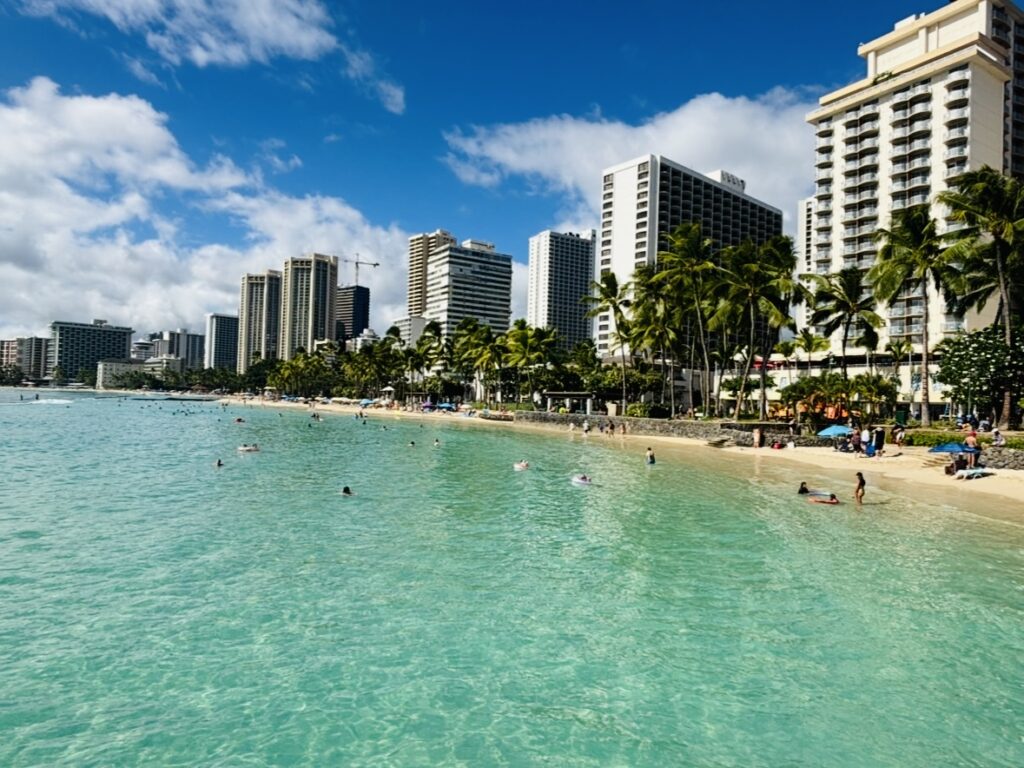
Start with Waikīkī Beach. It’s touristy and definitely not the most beautiful beach on the island, but it’s worth seeing because it’s classic Honolulu: the beach with all the city buildings behind it is the image most people have of the city. Walking along the beach, you’ll pass some historic hotels like Moana Surfrider, which opened in 1901 and is often called the “First Lady of Waikīkī.” Its Victorian architecture and beachfront location make it a key landmark. Another one is The Royal Hawaiian, opened in 1927 and nicknamed the “Pink Palace of the Pacific” for its pink exterior and Spanish-Moorish design. It’s been a symbol of luxury for nearly a century and has hosted royalty, celebrities, and dignitaries.
Ala Moana
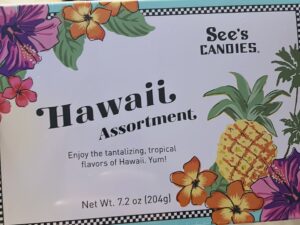
After the beach, head to Ala Moana Shopping Center for souvenirs. Honolulu Cookie Company has a location there, which is great for quick gifts to bring back home. Their individually wrapped cookies are very reasonably priced. There’s also a See’s Candies store. If you aren’t familiar with See’s they are mostly found in California and as an East Coaster, they are such a treat for me. And I recommend if you are a See’s fan, checking out their Hawaiian tropical themed chocolate box.
If you want to save some money, Walmart is nearby and worth a stop. They have a surprisingly good selection of Hawaii-themed items like plumeria earrings, macadamia nut products, leis, and other souvenirs. It’s also one of the more affordable spots for groceries while you’re in Honolulu.
Day 2: Malasadas, Diamond Head, and Botanical Gardens
Leonard’s Bakery
Start your day early at Leonard’s Bakery. They open at 5:30 am, which makes it perfect for grabbing breakfast before the crowds. Leonard’s is famous for malasadas, Portuguese-style doughnuts without holes that became a beloved part of Hawaiʻi’s local food culture after Portuguese immigrants brought them in the late 1800s. The malasadas are soft, fluffy, and often filled with custard, haupia (coconut cream), or other tropical flavors. Leonard’s classic neon sign and longstanding reputation make it the most well-known malasada spot in Hawaiʻi.
Diamond Head
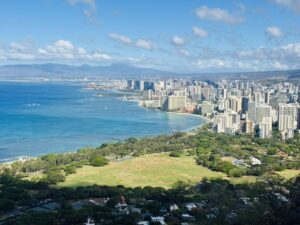
Next, head to Diamond Head, or Lēʻahi in Hawaiian, one of Oʻahu’s most recognizable natural landmarks. This volcanic tuff cone was formed by a single eruption about 300,000 years ago and later served as a strategic military lookout, complete with bunkers and tunnels that you can still explore. The summit hike offers sweeping views over Waikīkī and Honolulu.
Ho‘omaluhia Botanical Garden
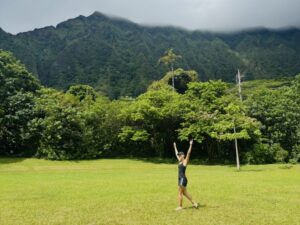
After your hike, drive to the windward side of the island to Ho‘omaluhia Botanical Garden, a 400-acre rainforest-style garden at the base of the Koʻolau Mountains. Opened in 1982 and originally designed by the U.S. Army Corps of Engineers for flood control in Kāneʻohe, the garden’s name means “peaceful refuge,” and it lives up to it. The garden features tropical plants from around the world, organized by region—from Polynesia, Malaysia, Africa, India/Sri Lanka, to Tropical America—with special attention to Hawaiian and Polynesian species. You can enjoy walking trails, a 32-acre lake, picnic areas, and even camping with a permit. Admission is free, and no advance reservation is needed for general visits.
Lunch Near the Garden
Right nearby is a great shopping center with a Foodland and a few restaurants. Including Don Goyo’s Mexican Food in Kāneʻohe, which I highly recommend. After living the last few years in Italy and Japan, I MISS Mexican food. My husband loved the margaritas and fajitas. I loved everything and if we were staying longer in Hawaii we probably would have come back her a few more times.
Liliha Bakery
After heading back towards Honolulu another special treat I’d recommend is a stop at Liliha Bakery. It’s best known for the Coco Puff, a cream-filled chocolate pastry with whipped frosting. The bakery also serves poi mochi donuts, malasadas, cakes, and other pastries, alongside savory local dishes like loco moco, hamburger steak, and oxtail soup. Recipes date back to the 1950s, giving Liliha a nostalgic feel and making it a popular stop for both quick treats and full meals. We were visiting friends in the evening so we didn’t stop at the bakery but thankfully they surprised us with a beautiful cake from there.
Day 3: Dole Factory, the North Shore and the Polynesian Cultural Center
I started the day at Aloha Bakehouse, a coffee spot I used to go to when I lived in Oʻahu. Visiting felt nostalgic, and it was nice to see they still had the strawberry white chocolate scones I loved. Before heading out for the day, I stopped by my old job nearby, which made the morning feel even more like a trip down memory lane.
Dole Plantation
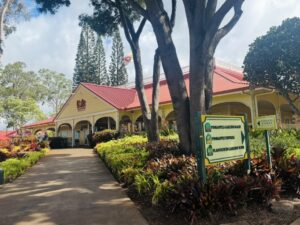
Next, we went to the Dole Plantation. We didn’t do the maze or any of the official tours, but we wandered around looking at the pineapple plants and some of the bromeliads, which are one of my favorite types of plants. The gift shop is huge, offering a ton of souvenirs, and of course, we had to have a Dole Whip—it’s just part of the experience.
Pineapples became closely associated with Hawaiʻi —even though they actually originate from South America—because the islands’ tropical climate is ideal for growing them, and large-scale commercial plantations—like those started by James Dole, an American entrepreneur known as the “Pineapple King”—made Hawaiʻi a global center for pineapple production. Over time, pineapples became both an economic staple and a cultural symbol, which is why treats like Dole Whip and plantation tours are so popular with visitors.
North Shore
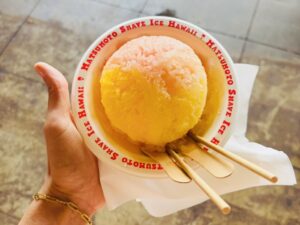
After the plantation, we drove up to the North Shore, famous for its surf culture. The area is known for massive winter waves, surf competitions, and a laid-back, beach-town vibe. It’s a hub for both professional surfers and visitors who want to experience the surf scene. We stopped at the famous and very popular Matsumoto Shave Ice for a refreshing icy treat and did a quick drive-by of Waimea Bay, which has always been my favorite beach from when I lived on Oʻahu. Do not skip the North Shore, it is one of the best places in Oahu, in my opinion.
Polynesian Cultural Center
We ended the day at the Polynesian Cultural Center. Tickets are pretty pricey and you need to book in advance, but there’s a lot to see and do. Each Polynesian island has exhibits and shows, and there are cultural activities you can join. For dinner, there are two buffet options. The Aliʻi Luau Buffet features traditional Hawaiian and Polynesian dishes like kalua pork, huli huli chicken, poke, and tropical desserts, accompanied by live cultural performances. The Gateway Buffet is more casual and offers a wider variety of dishes, including carved meats, seafood, salads, and kid-friendly options. We went with the standard buffet. The food was fine, nothing really stood out, but they also ran out of coffee an hour before the buffet ended and that was frustrating since no one replenished it even though many people were asking.
After dinner, we stayed for the nightly show, HĀ: Breath of Life, which runs about 90 minutes from 7:30 PM to 9:00 PM. It’s a theatrical performance that mixes music, fire dancing, special effects, and storytelling, following the journey of a young boy traveling across Polynesia. The show highlights the cultures of the Pacific islands and is both entertaining and immersive.
Most of the staff at the Polynesian Cultural Center are college students from Brigham Young University–Hawaii. Through the IWORK program, students can cover tuition, room, and board by working around 19–20 hours per week during the semester, with more hours during breaks. They perform in shows, guide tours, work in food service, guest services, and maintenance. This setup allows students—many from Polynesia or other Pacific islands—to gain real-world experience while helping PCC provide authentic Polynesian experiences. The program has supported thousands of students over the years.
Day 4: Kualoa Ranch
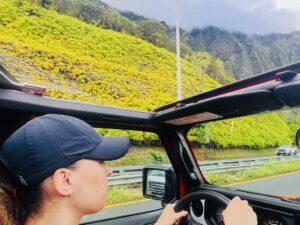
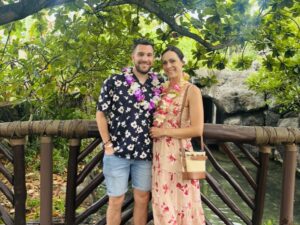
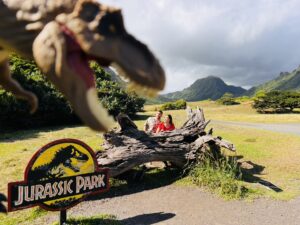
We started the day at Kualoa Ranch with the Jurassic Park tour, and somehow we lucked out—our early-morning group ended up being just the two of us. This was the activity my husband was most excited for. I wasn’t that into it at first, but I ended up really enjoying myself. Our guide was friendly and laid-back, and we loved visiting the different filming locations while learning behind-the-scenes stories about the movies shot there.
Kualoa Ranch is a 4,000-acre private nature reserve and working cattle ranch on Oʻahu’s windward side, owned by the Robinson family, descendants of early Hawaiian leadership. The family has preserved the land for generations, maintaining its cultural and historical significance while opening it to visitors. Guests can explore movie-site tours, farm and agricultural experiences, ocean adventures, and outdoor activities, all with an emphasis on Hawaiian history and sustainable land practices.
Foodland
After the tour, we grabbed a quick lunch at Foodland before heading back to return the car and catch our flight. Foodland is a locally owned supermarket chain founded in 1948 in Honolulu, with multiple locations across Oʻahu and other islands. It offers groceries, deli items, baked goods, and locally sourced products, highlighting community support and Hawaiian culture. Some of their most popular foods include fresh poke in a variety of styles, salt-and-vinegar wings, hot-bar fried items, grab-and-go sushi, musubi, bento boxes, and bakery treats. The wings, poke, and sushi are my favorites—coming from someone who lives in Japan, that says a lot. Foodland is a long-standing, reliable spot for convenient, fresh, and locally inspired food for both residents and visitors.
Conclusion
In four days on Oʻahu, you can hit the main sights, enjoy some local food, and get a feel for both the city and the more laid-back parts of the island. It’s enough time to see the highlights while still leaving room for a few personal favorites along the way. If we had extra days on the Island I would have used them purely for the beach—oh and maybe to hit up Ted’s bakery of course. Hawaii you will forever have my heart and the hearts of so many others.
Don’t forget to check out these other posts:
Haleakala National Park in Maui