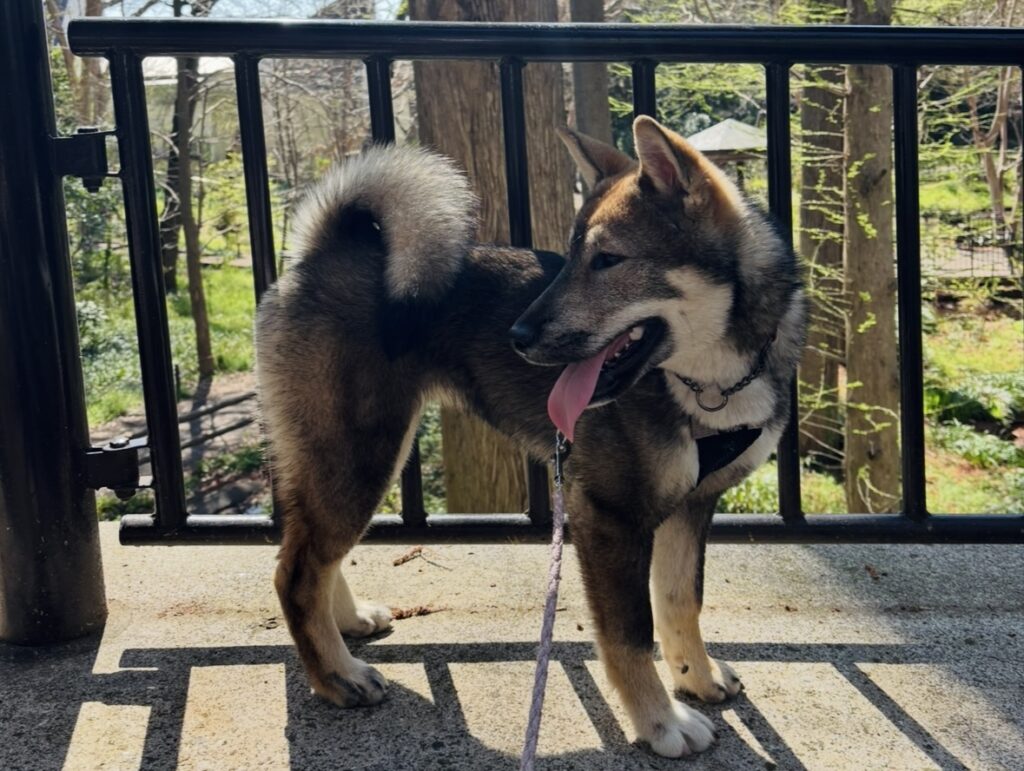
The Shikoku Ken is kind of like the Shiba’s athletic, focused cousin. Originating over 1,000 years ago, the Shikoku Ken is a medium-sized hunting dog native to Shikoku Island in southern Japan. Shikokus generally weighs between 15 and 23 kilograms (33–50 pounds) and were bred for tracking and pursuing wild boar through mountainous forests. Because of this they are high-energy dogs that need lots of exercise to burn off their endless stamina. Often compared to a wolf, their weather-resistant double coat is most commonly seen in sesame (black-tipped red hairs). Compared to a Shiba, Shikokus are generally more willing to train and work with you—though they still have a bit of that independent streak. Like other Japanese breeds, they are wary of strangers and often selective with other dogs. You won’t see many outside Japan—and honestly, they’re pretty rare in Japan too.
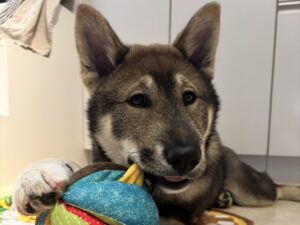
The Shikoku Ken remains one of Japan’s rarest native dog breeds because they were kind of hidden away for most of their history. They come from the remote mountains of Kochi on Shikoku Island, a place that remained geographically and culturally isolated from the rest of Japan for centuries. This kept the breed pure but also mostly unknown. Meanwhile, Shibas became city favorites due to their compact size, Akitas went global thanks to Hachiko, and Kishus though less famous abroad, benefitted from more accessible breeding and preservation efforts.
The Shikoku Ken historically had three main bloodlines: Hongawa, Hata, and Awa. The Hongawa line is considered the purest and most representative of the breed. Dogs from this line were known for their feral, wolf-like appearance, with sharp facial features, tight curled tails, and a sesame-colored coat, and they had an alert, cautious temperament—often wary of strangers but deeply loyal to their owner. In contrast, the Hata line dogs were a little stockier, had more coat color variety (such as black & tan), and were generally a bit more people-friendly. Then there’s the Awa line, It got mixed with other dogs, lost the classic Shikoku look and personality, and after WWII, it pretty much disappeared. Today, that line is basically considered extinct.
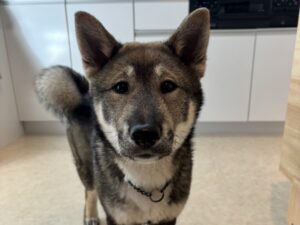
Finding Nori: A Dream Years in the Making
A little more than ten years ago, I saw a picture of a Shikoku Ken and was intrigued. After getting a Shiba, I fell down the rabbit hole of Japanese dog breeds, and the Shikoku’s wild wolf-like look really stood out. I searched breeders in North America and was disappointed to find there were hardly any, making Shikoku puppies exorbitantly expensive. So the idea stayed in the back of my mind.
Fast forward a few years—I got married and moved to Italy. We started thinking about getting a dog, and just out of curiosity, I looked up Shikoku breeders. To my surprise, there were a few in Italy and one close to where we were living in Milan. I even saw one walking near Sempione Park once. But since they only had litters once or twice a year, I had to wait. Finally, a puppy became available, but we unexpectedly had to move to Japan. That’s when I thought, “Okay, now I’ll definitely find a Shikoku.” But it still took me a whole year! Most people in Tokyo buy dogs from pet shops. So finding a breeder was tough, but with help from a friend, I finally connected with one. She had a 12-week-old pup she’d been planning to keep, but in the end, she let me have her.
Now she’s ours. We named her Nori, which means seaweed in Japanese and always gets a laugh from locals. She’s clever like my Shiba, learning commands super fast, and I swear she understands English fluently. She has that typical Shiba attitude too—just the right amount of stubborn. But she’s also gentle, like my Akita—delicate when she takes food, patient when I brush her, even if she hates it. She’s my shadow, all day following me around from room to room. In truth I love our daily hour-long-walk just as much as she does. Although we’ve had her for less than a year, she feels so much a part of our family, it’s hard to remember the years before she arrived.
Owning a Shiba, Akita, and now a Shikoku has given me a rare perspective on Japan’s native breeds, but also Japanese culture. Each dog has taught me something different: the sharp wit of the Shiba, the quiet strength of the Akita, and the focused drive of the Shikoku. What connects them all is a shared temperament that reflects the heart of Japanese culture itself—intelligent but independent, loyal but restrained, affectionate but never needy. These dogs were shaped by Japan’s remote rugged landscapes and its values: devotion, self-reliance, and respect for personal space. Their aloofness isn’t distance—it’s discretion. Their stubbornness isn’t defiance—it’s dignity. We’ve only lived with three of Japan’s native breeds so far, maybe one day, the Kishu, Hokkaido, and Kai will find their way into our lives too.
If you enjoyed this, check out these other posts:
Living with Japanese Dog Breeds: Part 1 The Shiba Inu
Always enjoy coming to this site—reliable
and full of useful content.