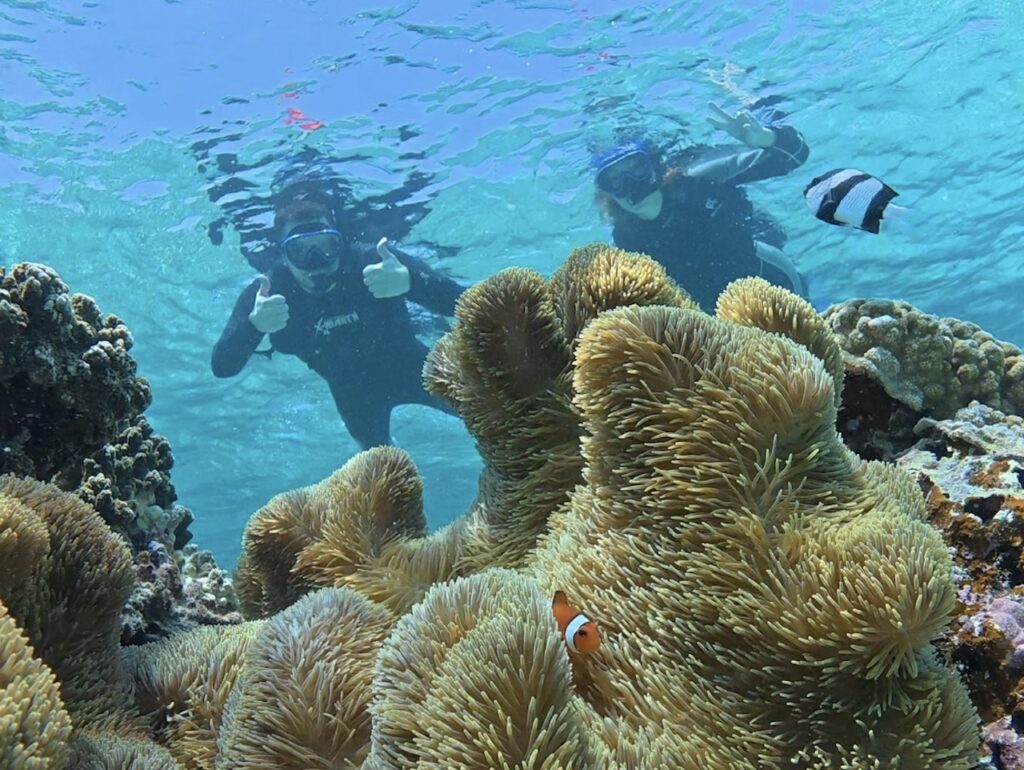
Often called the Hawaii of Japan, we just got back from a weekend in Okinawa. Before moving to Japan, I only knew it as a blue zone, where people sometimes live into triple digits. The longer I live here in Japan though, the more I hear about this beautiful beach paradise and the more my curiosity has grown. So my friends and I booked a spontaneous weekend getaway to Miyakojima, Okinawa. What I found there was nothing like I expected, and that turned out to be the best part. If you are thinking about visiting Okinawa, Japan, here is quick breakdown of what the Miyako islands are like, local Okinawan foods to try and what to do and see in Miyakojima:
So, What’s the Deal with Okinawa? Quick Background and History…
Of the more than 160 islands that make up Okinawa Prefecture only about 49 are inhabited. The three major island chains include: the Okinawa Islands (central), Miyako Islands (southwest), and Yaeyama Islands (farther southwest). We stayed on the main Island of the Miyako Islands, Miyakojima.
What makes Okinawa so interesting, is that although a part of Japan, originally it was an independent Kingdom. From the 1400s to the late 1800s, the Ryukyu Kingdom was a trade hub between China, Japan, and Southeast Asia. It had its own kings, language, religion, and culture. Geographically, Okinawa is closer to Taiwan and China than Japan. However, in 1879 Japan forcibly took control of the Ryukyu Kingdom and ended their monarchy. Japanese language, education, and culture were imposed, and Ryukyuan languages and traditions were discouraged. Today fewer than 1 million people are fluent in any Ryukyuan language and it is considered endangered. Over time, many Ryukyuan’s assimilated, but there is still a strong sense of cultural difference today. Okinawans are Japanese citizens, but many cherish their Ryukyuan identity.
After WWII, the U.S. occupied Okinawa. At first the U.S. controlled it as a military territory for almost 30 years, before giving Okinawa back to Japan in 1972. The U.S. continues to maintain many military bases with tens of thousands of troops in Okinawa as part of a security treaty due to nearby China, Taiwan, and Korea. Okinawa continues to be caught in the middle—geographically and politically.
That said the positive resilient mindset, healthy diet, active lifestyles, and close-knit community of traditional Okinawan people no doubt contributes to their long life-expectancies. Plus, they kind of live in Paradise. Or at least that was my impression of Miyakojima. The Miyako Islands are less touristy from the other Islands making up Okinawa Prefecture. The crystal-clear waters rivaled the Caribbean, and the laid-back atmosphere reminded me of childhood beach trips to the Outer Banks during the off season. We also visited Okinawa during the tail end of their off-season—in early June—just as the rainy season was ending. While some restaurants and tours were closed, the peacefulness made for the perfect quiet escape from Tokyo crowds.
Flavors of the Islands: What to Eat in Okinawa
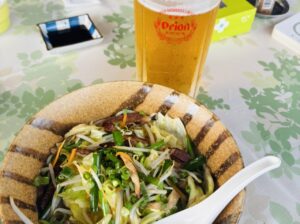
Among the many regional specialties in Okinawa, two dishes kept coming up: soba and taco rice. While Okinawa offers a wide variety of local foods, these two are especially popular with visitors. Okinawa soba differs from the traditional Japanese version—it’s made with wheat noodles rather than buckwheat and has been around since the Ryukyu Kingdom. These days, it’s kind of like Okinawa’s version of comfort food. Taco rice, meanwhile, was created during the U.S. military presence. It was designed by local chefs for American soldiers craving tacos, but adapted with a Japanese twist—served over rice instead of in a tortilla. Together, these dishes highlight the unique blend of history and culture that defines Okinawan cuisine.
One thing I didn’t expect to love? Seaweed! One highlight was trying a couple of traditional Okinawan seaweed dishes—mozuku and umibudō (also known as sea grapes). The mozuku, often served as a starter, came in a light vinegar dressing and was refreshingly tangy—I ended up really enjoying it. I only saw umibudō occasionally as a garnish, but its delicate texture and subtle flavor were just as memorable.
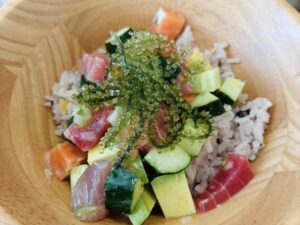
To drink, I went for an Awamori-based cocktail. Awamori is Okinawa’s traditional rice liquor, and it’s surprisingly smooth. Of course, I also had to try a cold Orion Beer, founded in 1957 in Nago City, Okinawa. Tip: you can actually tour the Orion brewery if you’re ever in Nago!
Lastly, you can’t visit Okinawa without trying Blue Seal Ice Cream. Started in 1948 by the U.S. military for American soldiers, now super popular with locals too. It’s basically American-style ice cream, but with unique Okinawan flavors like purple sweet potato (ube), pineapple coconut, Ryukyu tea warabi mochi, and my favorite, the Okinawan salt cookies.

What to do: Exploring Miyakojima
Beaches and Snorkeling
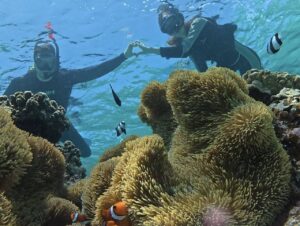
I can only speak on the Miyako Islands currently. But wherever you go in Okinawa one of the most popular activities is relaxing at the beach or snorkeling. Specifically, in Miyakojima Yonaha Maehama Beach is popular due to calmer clearer waters and an abundance of tropical fishes swarming the coral reef. If you want amazing underwater photos, there are tour groups that can take them for you. If you’d rather go at your own pace, plenty of beaches rent out snorkel gear. Or just grab a set at the Mega Don Quijote on the island—they’ve got everything. Another popular beach is Sunayama Beach famous for its Instagram-able rock formations, including an iconic coral arch.
The Irabu Bridge
Another super popular photo spot, the 3,540-meter-long Irabu Bridge connects Miyakojima to Irabu Island. With turquoise blue ocean views on either side, you’ll see many others taking advantage of the pull offs on the bridge to snap a shot.
Cape Higashi-Hennzaki Lighthouse
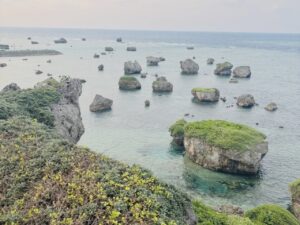
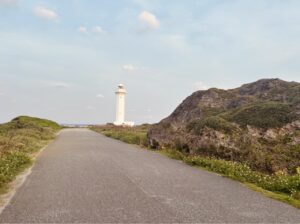
I’m a sucker for a Lighthouse so if you are like me, make a trip to Cape Higashi-Hennzaki Lighthouse at the eastern tip of Miyakojima. Especially beautiful at sunrise, large rocks scattered along the coastline are believed to have been brought by the 1771 Meiwa Tsunami. The cape also features a scenic path leads from the parking area to the lighthouse, passing through fields adorned with seasonal flowers such as white Easter lilies in spring and yellow or orange Gaillardia in summer. If you want to go up the lighthouse, you’ll find it open daily from 9:30 AM to 4:30 PM, with an entrance fee of ¥300 for adults; elementary school children and younger can enter for free.
Know Before You Go!
- Definitely Rent a car. Public transportation in Okinawa is limited and inconsistent. Additionally, the island’s spread-out layout makes having your own wheels a huge plus. We had a rental booked ahead of time, and between Google Translate and a bit of miming, we managed just fine picking it up. A heads-up for those from the U.S.: they drive on the left here and the steering wheel is on the right. My husband drove, and though it threw him off at first, he got the hang of it pretty quickly. The roads are wider and less congested than Tokyo, which definitely helped.
- Carry cash. For a country that’s so tech-forward, Japan can still feel surprisingly old-school, and Okinawa is no different. A lot of restaurants only accept cash, and to our shock, one of our friends was told they had to pay their entire car rental fee in cash when they arrived. Totally drained what they brought. Worst case scenario, look out for convenience stores to replenish cash, as they always have an ATM.
- Eat local. Our first night in Miyakojima, we hit up a touristy restaurant walking distance from our resort. Since Japan has zero tolerance for drinking and driving, we didn’t want to go far—we just wanted a beer to kick off the trip. But the food? Overpriced and underwhelming. I’m talking reheated freezer-meal vibes for triple the price. After that, we learned our lesson and went full local. The tinier the spot, the better the food. Or in other words: the less English friendly, the better.
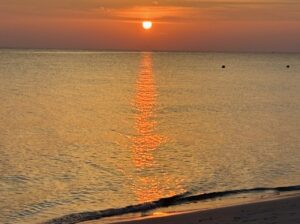
If you ever find yourself in Okinawa, make the time to visit Miyakojima. The islands offer a fascinating history and culture, fresh and tasty local dishes, and some of the best beaches and snorkeling around. So if you’re looking for a slower, quieter, and sunnier side of Japan, I can’t recommend it enough.
For more of our adventures in and out of Japan, check out these other posts: