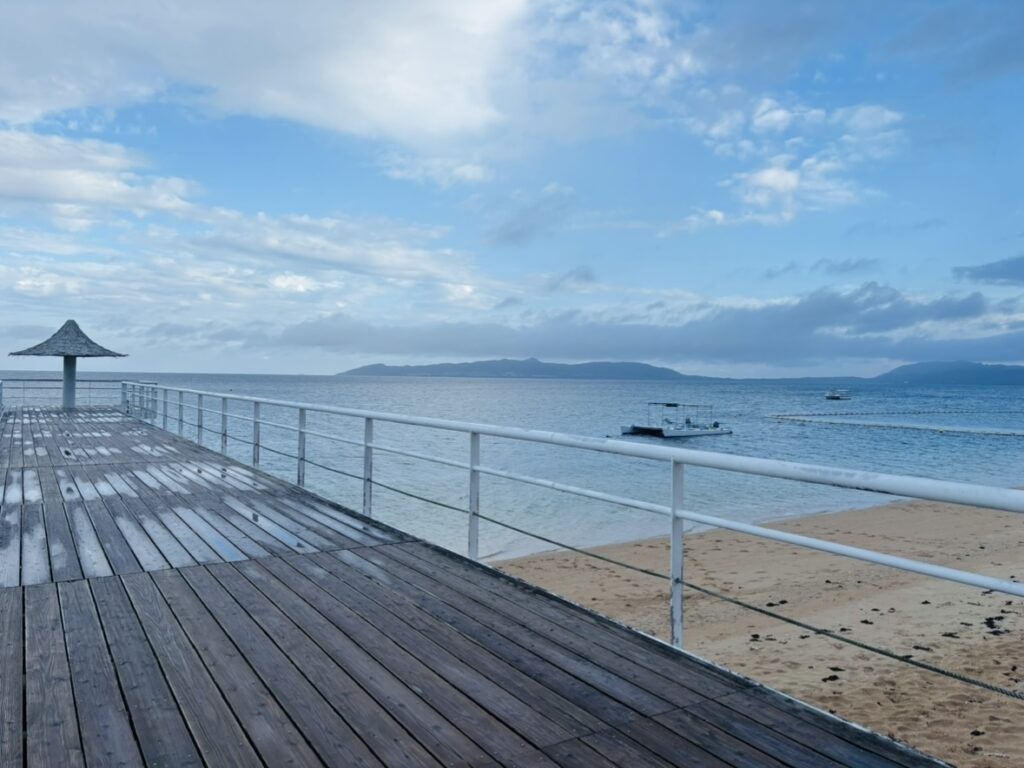
If you’re planning a trip to Okinawa, Japan, you’ve probably had people tell you that “It’s the Hawaii of Japan.” But honestly? I completely disagree. Having been there, it’s really not like Hawaii at all—and that’s exactly why you should visit. Okinawa doesn’t need to be a carbon copy of somewhere else; it is incredibly cool, unique, and stunning all on its own. The water is unbelievably clear, the snorkeling is world-class, and if you love fresh seafood, the local sashimi is ridiculously cheap compared to what you’ll pay up in Tokyo. Here is what people don’t tell you about what actually makes these islands so special, plus a few things I learned on our recent trip to Ishigaki Island.
A Whole Different Kingdom
Okinawa isn’t just one big island—it’s actually a massive chain made up of around 160 islands. It also hasn’t always been part of Japan. For centuries, it was an independent country called the Ryukyu Kingdom.
Because of that, it has a totally distinct history, architecture, and food culture separate from the mainland. While the main island gets the bulk of the tourists, escaping to the more remote islands like Miyakojima or Ishigaki gives you a real escape to relax.
The Flavors and Symbols of Okinawa
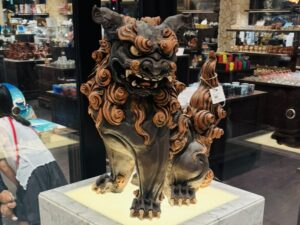
One thing you’ll notice is everywhere you look on the islands, you’ll spot pairs of guardian lion-dog statues called Shisa. Typically guarding doorways, they’re there to protect against bad luck. And they work as a team: the one on the left keeps its mouth closed to keep the good fortune in, while the one on the right has its mouth wide open to scare bad things away.
During the Ryukyu Kingdom era, Okinawa was a bustling maritime hub. It was used for trade between China, Japan, and Korea. Okinawa maintained a strict tributary relationship with China, meaning the kingdom was allowed to run its own internal affairs independently. However, it had to formally submit to the Chinese Emperor. Okinawa sent regular gifts to get his official approval for each new king. This deep connection brought aspects of Chinese culture. Among them was the mythological guardian lion. The local Okinawan word for this lion was Shisa. China traditionally used massive stone lions for grand government buildings and palaces. The people of Okinawa completely changed this tradition. They brought smaller clay versions into daily life. They placed them on residential stone gates and high atop red-tile roofs. Because the islands are battered by intense seasonal typhoons the everyday people believed these roof-bound Shisa acted as shields against the storms. They believed the open mouths would roar away evil spirits and destructive storms. Interestingly, now these statues are more common in Okinawa than in modern China. Additionally, Shisa have become a sort of mascot for the islands. They are widely featured on colorful souvenirs, keychains, and playful local merchandise.
Then there’s the food. One of Okinawa’s most famous agricultural exports: Okinawan Brown Sugar (Kokuto). True kokuto is nothing like the standard grocery store stuff, which is usually just white refined sugar with a bit of molasses sprayed back in. It is completely unrefined, made by slowly boiling pure sugarcane juice for hours until it solidifies into dark, irregular chunks. Because Okinawa’s sugarcane grows in coral-rich soil and absorbs constant, mineral-heavy sea breezes, it packs a massive amount of natural calcium, potassium, and iron. This gives it a complex, deep flavor that is distinctly sweet but with an earthy, almost savory, mineral undertone. Sugarcane was first brought to the islands from China in 1623, and for generations, Okinawan elders have eaten small chunks of kokuto with tea as a health food to fight off heat fatigue during humid summers, making it a foundational part of the island’s famous longevity culture.
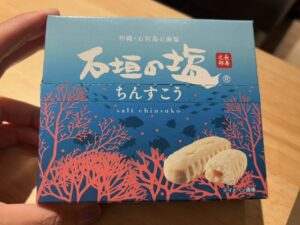
This rich, mineral-heavy sugar doesn’t just get eaten on its own; it also serves as a core ingredient in Chinsuko Cookies, the definitive Okinawan sweet. Chinsuko features a crumbly texture similar to shortbread, but with a major historical twist. Instead of butter, traditional chinsuko uses lard, reflecting Okinawa’s heavily pork-centric food culture where absolutely no part of the pig goes to waste. The pork fat gives the cookie a distinct richness without tasting savory or meaty. Back during the Ryukyu Kingdom era, this cookie was a highly exclusive, sacred pastry reserved strictly for royalty and visiting Chinese diplomats; its name even translates to “rare, precious pastry.” Originally, it was steamed and cut into coin shapes, but it evolved into the baked, elongated, ridged finger-biscuit we see today. Modern bakers love combining Okinawa’s best local ingredients, so you’ll frequently find them flavored with kokuto brown sugar, purple sweet yam, or a pinch of local Miyakojima sea salt to cut through the sweetness.
Two Nights in Ishigaki
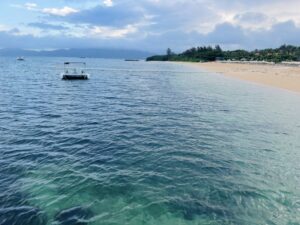
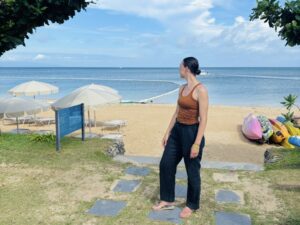
We just did a quick two-night getaway to Ishigaki, and even though it feels a lot more remote and untouched, it still has some incredibly beautiful resorts. For us, it was the perfect place to just slow down and enjoy the beach. We stayed at a resort with its own private beach that had safety netting set up to protect against jellyfish. Honestly, I really appreciated that. I’m one of those people who both loves and fears the ocean, so having that extra precaution made our day of snorkeling completely worry-free.
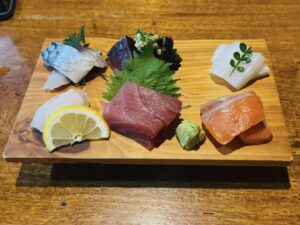
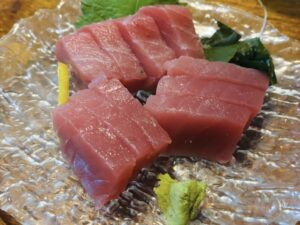
When we weren’t in the water, we were eating. We found some small, local neighborhood restaurants nearby and absolutely stuffed ourselves with fresh sashimi. It was abundant, caught right there, and cost a fraction of Tokyo prices. My only real regret is that we didn’t stay a little longer to explore more of the island.
Two Things You Absolutely Must Do Before You Go
If you decide to book a trip down to the islands, I have two big pieces of advice to make sure your trip goes smoothly:
• You absolutely have to rent a car. Public transit isn’t like mainland Japan out here. If you want the freedom to find the best beaches and local food spots, you need your own wheels.
• Book your dinner reservations in advance. I’m serious about this one. If you don’t lock down your tables ahead of time, you will end up wandering around hungry because everything fills up fast.
To Sum it up…
If you really want to compare Okinawa to Hawaii, there is actually only one specific way that holds up: going to Hawaii is the closest thing to visiting another country within the US because it still holds onto its own rich cultural heritage from when it was a kingdom. Okinawa feels exactly like that, but for Japan. Okinawa might not be Hawaii, but the distinct history, the food, and the clear blue water make it easily one of the best places to experience a completely different side of Japan.
For more of our adventures, check out these other posts:
Exploring Miyakojima Okinawa, Japan